Guides
Looking after your guitar: the complete guide
Strings, cleaning, humidity, setup: the routines that keep a guitar pleasant to play for years, and the ones best left to a luthier.
Free calculators for guitarists: string tension by gauge, tuning and scale length, tempo to milliseconds for setting a delay, speaker impedance, Ohm's law, watts to dB, inch to mm conversions.
Pick the scale length, tuning and a preset string gauge set (or set each gauge by hand) to estimate the tension of every string.
| Open note | Gauge (thousandths of an inch) | Type | Tension (kg) | Tension (lb) | Feel |
|---|---|---|---|---|---|
| E2 | 7.9 | 17.5 | normal | ||
| A2 | 8.9 | 19.5 | normal | ||
| D3 | 8.3 | 18.4 | normal | ||
| G3 | 7.5 | 16.6 | normal | ||
| B3 | 7.0 | 15.4 | normal | ||
| E4 | 7.3 | 16.2 | normal | ||
| Total tension | 46.9 | 103.5 |
Estimated from D'Addario's published unit weights for plain steel and nickel wound strings. For phosphor bronze acoustic strings, expect a few percent of difference from these figures.
Tap repeatedly at the desired tempo: the average of the last 4 gaps sets the BPM.
| Note value | Duration (ms) |
|---|---|
| Whole note | 2,000.0 |
| Half note | 1,000.0 |
| Dotted half note | 1,500.0 |
| Quarter note | 500.0 |
| Dotted quarter note | 750.0 |
| Eighth note | 250.0 |
| Dotted eighth note | 375.0 |
| Eighth note triplet | 166.7 |
| Sixteenth note | 125.0 |
| Sixteenth note triplet | 83.3 |
| BPM if it's a quarter note | 120.0 |
|---|---|
| BPM if it's an eighth note | 60.0 |
4.00 ΩTotal impedance
| Speaker | Power share |
|---|---|
| 8 Ω | 50 % |
| 8 Ω | 50 % |
Parallel wiring: every speaker sees the same voltage, so power splits inversely to impedance (the lowest-Ω speaker gets the most power).
Tube amp: stick to the output impedance set on the amp. A slightly higher-than-rated load is barely tolerable; never use a lower load, and never run the amp without any load connected.
Solid-state amp: never go below the minimum impedance stated by the manufacturer, or you risk damaging the output stage.
Enter two values among U, I, R and P: the other two are calculated automatically.
+3.0 dBGain
| Radius | mm |
|---|---|
| 7.25″ | 184.1 |
| 9.50″ | 241.3 |
| 12.00″ | 304.8 |
| 16.00″ | 406.4 |
| Scale length | mm |
|---|---|
| 25.5″ (Fender, Ibanez…) | 647.7 |
| 24.75″ (Gibson) | 628.7 |
| 25″ (PRS) | 635.0 |
| 24″ (Jaguar, Mustang) | 609.6 |
| 27″ (baritone) | 685.8 |
| 34″ (bass) | 863.6 |
| 30″ (short-scale bass) | 762.0 |
| Height | Feel |
|---|---|
| 1.5 mm | ≈ 4/64″ |
| 2.0 mm | ≈ 5/64″ |
Each calculator is independent; pick the tab you need.
The tension calculation relies on the unit weights published by D’Addario for nickel (electric) strings and on the classic physics formula linking tension, vibrating length, frequency and mass. It is an estimate: phosphor bronze, stainless steel, hex- or round-core strings, or strings from other makers deviate by a few percent. The actual vibrating length also differs slightly from the nominal scale length because of bridge compensation.
The light/normal/heavy marker is indicative and reflects common usage on electric and acoustic guitars, not a manufacturer’s recommendation. Action and radius values are orders of magnitude.
The impedance calculator does not replace your amp’s manual: mismatch tolerances vary between manufacturers, and some valve heads tolerate none. When in doubt, the exact impedance is the only safe rule. The first amp guide explains the differences between valves and transistors.
Dropping a whole tone loses roughly 20% of tension at the same gauge: a 10-46 set in drop C goes floppy and buzzes. The calculator shows that an 11-52 or 12-56 set brings the tension back close to a 10-46 in standard. Then check the nut, which may need adjusting for the thicker strings.
Divide 60,000 by the tempo in BPM to get the length of a crotchet in milliseconds: at 120 BPM a crotchet lasts 500 ms, a quaver 250 ms and a dotted quaver 375 ms. The dotted quaver is the classic setting for rhythmic rock and pop delays. Enter the tempo in the calculator and copy the value to the pedal.
On a solid-state amp, yes: a higher impedance than the rated one is safe, the amp simply delivers a little less power. A lower impedance, on the other hand, can overheat it. On a valve amp, match the impedance selected on the output; a one-step mismatch is generally tolerated by manufacturers, but check the manual.
No. Doubling the power adds 3 dB, which the ear perceives as a little louder, not twice as loud. For a perceived doubling of volume you need about ten times the power, that is 10 dB. Speaker efficiency often matters more than the amp's wattage.
On an electric guitar, an action of about 1.5 to 2 mm under the low E at the 12th fret and a little less under the high E is common; on an acoustic, expect around 2 to 2.5 mm on the bass side. These are reference points, not rules: playing style, gauge and neck relief all shift the ideal value.
Last updated: 11 September 2026
Our reviews, comparisons and guides related to this tool.
Strings, cleaning, humidity, setup: the routines that keep a guitar pleasant to play for years, and the ones best left to a luthier.
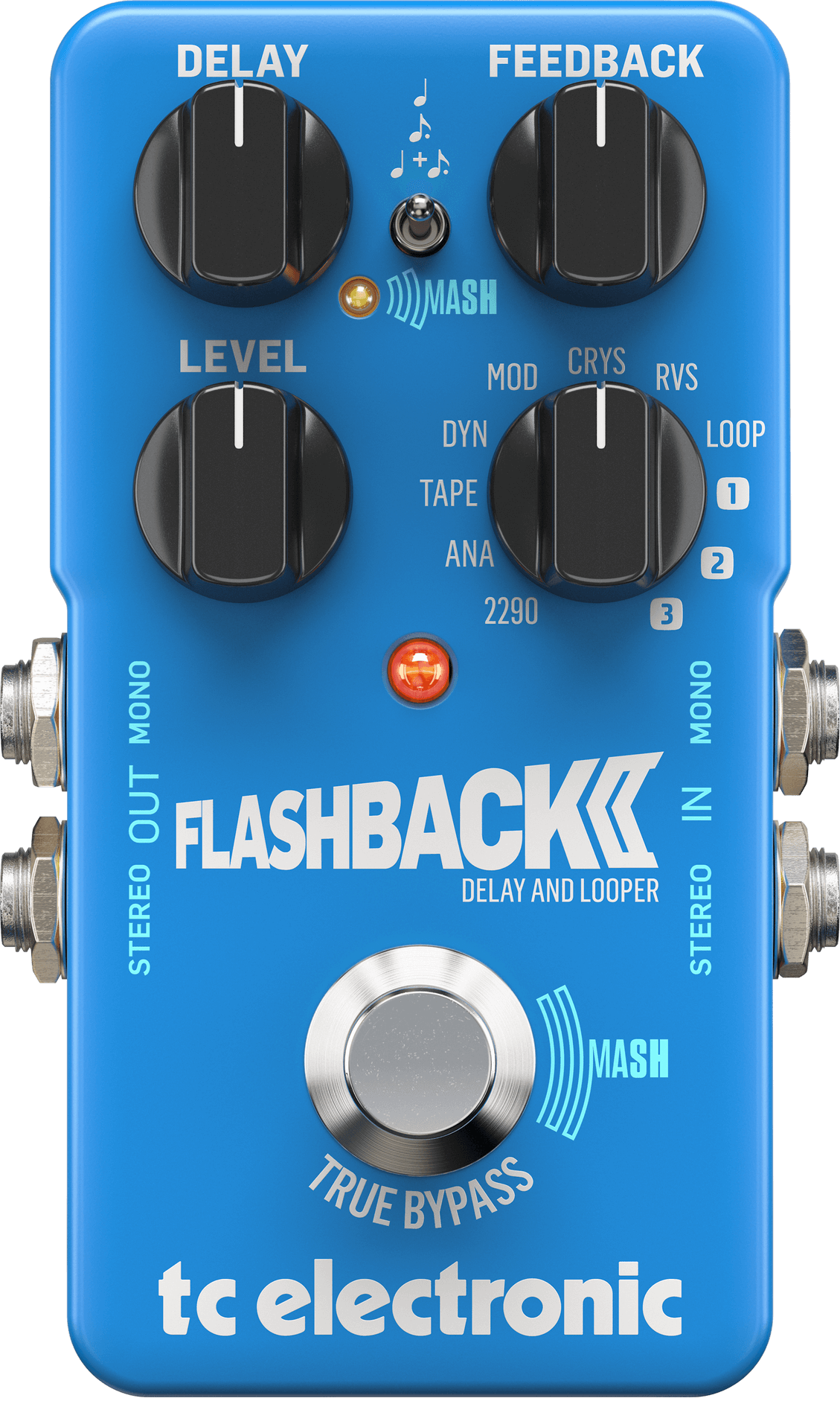
TC Electronic
A complete guide to choosing your first electric guitar amp: amp types, power, budget, brands. All our advice for getting started properly.