The history of the Gibson Les Paul: from commercial failure to absolute myth
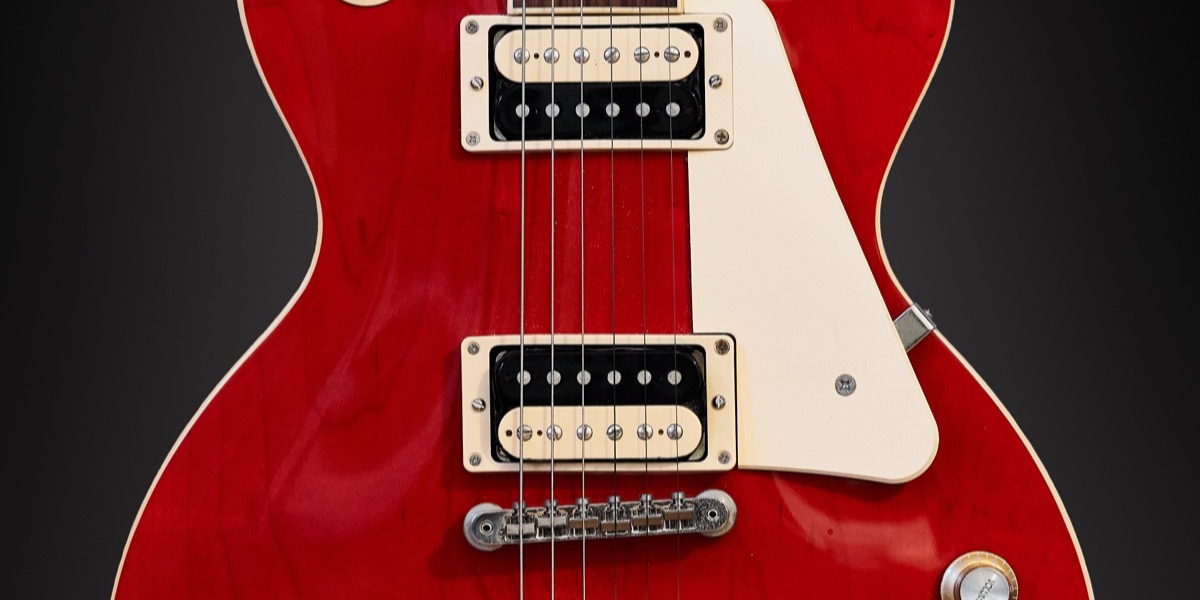
The story of the Les Paul is the most novelistic of any electric guitar, because it was written backwards. Conceived reluctantly by a prestigious maker that despised electrified planks, carried by an endorser who had not drawn it, discontinued after nine years for mediocre sales, it was crowned in retrospect by a generation of English guitarists playing second-hand examples. The instruments Gibson struggled to shift in 1960 are now worth the price of a house.
Kalamazoo against Fullerton
To understand the Les Paul you have to measure what Gibson represented in 1950. Founded in Kalamazoo, Michigan, at the turn of the century around the ideas of the luthier Orville Gibson, the brand was then the aristocracy of the American guitar: masterly archtops, legendary mandolins, and the first successful electric guitar in history, the ES-150 popularised from 1936 by Charlie Christian. When a certain Leo Fender, a Californian radio repairman, launched an ash solid body with a bolt-on neck in 1950, Kalamazoo shrugged: that is not lutherie.
The contempt lasted as long as the sales figures allowed. The Telecaster took hold, orders flooded in at Fender, and Ted McCarty, an engineer who became Gibson’s president in 1950, understood that the company could not leave the solid-body market to California. He set his teams on a response, with an implicit instruction: if Gibson has to make a plank, it will be a luthier’s plank.
Les Paul, the man who had been right too early
A founding irony: Gibson had the solid body in front of it ten years earlier. Lester William Polsfuss, known as Les Paul, a star guitarist and brilliant tinkerer, later a pioneer of multitrack overdubbing, had built his famous “Log” in the Epiphone workshops as early as 1941: a pine beam fitted with pickups, flanked by two body wings to save appearances. Shown to Gibson in the mid-1940s, the contraption was politely turned away; legend, kept alive by Les Paul himself, has it that someone spoke of a “broomstick with pickups”.
When the riposte to Fender became urgent, McCarty renewed contact. The agreement signed in 1952 was an endorsement contract: the new solid body would carry the name of Les Paul, then at the top of the record charts with Mary Ford, in exchange for royalties on every example. The musician’s exact share in the final design is still debated by historians; his name’s share in the launch’s success is not.
1952: the Goldtop, an aristocrat’s plank
The 1952 Les Paul Model is the anti-Telecaster. A mahogany body topped with a carved maple cap, a direct inheritance from the archtops; a mahogany neck glued to the body; a short 628 mm scale, more supple under the fingers than Fender’s; two meaty, gritty P-90 single-coil pickups; and that gold finish which earned it the Goldtop nickname. The message is plain: Gibson makes solid bodies, but in evening dress.
The launch was not without missteps, though. The shallow neck angle of the first examples imposed a trapeze tailpiece under which the strings ran the wrong way round, ruling out palm muting: guitarists complained. Gibson fixed it in 1953 with a wrap-around tailpiece, then in 1955 with the Tune-o-matic bridge and stopbar tailpiece assembly, patented in the McCarty era, still fitted to today’s Les Pauls. The range filled out: the black Custom in 1954, nicknamed the “Black Beauty”, the spartan Junior the same year, the Special in 1955.
Anatomy of a sound: mahogany, maple and a short scale
Before telling the legend, you have to understand what this construction produces to the ear, because the whole Les Paul cult rests on it. The mahogany body brings warmth and thickness; the maple cap, dense and stiff, adds the clarity and attack that stop the sound turning muddy. The glued neck extends that mass in one piece and favours a sustain that bolt-on instruments do not reach in the same way: notes seem to go on forever, something Ted McCarty was already claiming in period advertising.
The short 628 mm scale, against 648 mm at Fender, reduces string tension: bends take less effort, the touch is softer, and that suppleness shaped a whole vocabulary of playing, from the bluesmen’s wide vibrato to hard rock legato. Add pickups more powerful than the Californian single coils and you get the exact counterpoint to twang: where a Telecaster snaps and cuts, a Les Paul pushes, sustains and sings. Both schools of electric sound were in place by the mid-1950s; they have never merged.
1957–1960: the PAF and the “Bursts”, the unnoticed peak
Two innovations would, without anyone knowing it at the time, manufacture a myth. In 1957 Gibson fitted the Les Paul with the humbuckers designed by the engineer Seth Lover: two coils wired out of phase that cancel the interference picked up by single coils. The “Patent Applied For” sticker under those pickups would give the “PAFs” their name — the most copied and most fantasised pickups in history, with a sound at once thick, precise and vocal.
In 1958 the Goldtop gave way to a Standard whose maple top, often handsomely figured, was dressed in a cherry sunburst fade. Made until 1960 in roughly 1,700 examples by generally accepted counts, these “Bursts” are now regarded as the absolute summit of the electric guitar. Every example is unique: the figure of the top ranges from the plainest to the most spectacular, and the red pigment of the sunburst, unstable in light, faded differently on each guitar, giving those honey, tobacco or washed-out shades that collectors describe with a sommelier’s lexicon. A detail of varnish chemistry has thus become an appraisal criterion with six zeroes.
By 1960, however, the commercial verdict was unambiguous: too heavy, too expensive, too dated against the Fenders and the start of the instrumental wave, the Les Paul was selling badly.
1961: the discontinuation, and the SG misunderstanding
Gibson decided: in 1961 the carved-top Les Paul disappeared in favour of a thin mahogany body with a sharp double cutaway, lighter and cheaper to produce. The model first carried the Les Paul name, but the endorser did not like this nervy guitar he had not seen coming; between the musician’s reservations and contractual renegotiations, his name left the instrument, which was renamed SG, for “Solid Guitar”. The SG would make its own career, from Angus Young to Tony Iommi. The original Les Paul was dead. Or so it seemed.
The English resurrection
The myth was born in London in the mid-1960s, in the hands of kids buying second-hand the guitars America had not wanted. In 1966 Eric Clapton recorded with John Mayall the album known as “Beano”: a 1960 Burst plugged into a Marshall combo turned all the way up, and suddenly the whole world wanted that sound — thick, singing, endless. The record did more for the Les Paul than ten years of catalogues. Then came Peter Green with Fleetwood Mac, whose Burst “Greeny” would later pass to Gary Moore and then to Kirk Hammett, Mike Bloomfield in the United States, Keith Richards, and finally Jimmy Page, who acquired his 1959 “Number One” in 1969 and made it Led Zeppelin’s heavy artillery.
Overwhelmed by a demand it had buried, Gibson reissued the Les Paul in 1968. It would never leave the catalogue again, and the Les Paul–Marshall pairing became the equation of nascent hard rock; that amplified half of the story is told in our article on the history of Marshall.
Norlin, the crossing, the rebirth
Coming under the control of the Norlin group from 1969 gave Gibson its most criticised period: multi-ply “pancake” bodies and a volute reinforcement at the neck from 1969, rising weight, fluctuating quality control throughout the 1970s. As at Fender at the same moment, the decade durably established the vintage hierarchy: earlier models remain the standard. The 1986 buyout by Henry Juszkiewicz and David Berryman righted the ship, with an unexpected ally: Slash, whose bandaged Les Paul on “Appetite for Destruction” in 1987 reconnected a whole generation with the model. An additional irony in a story that has no shortage of them: the guitar in question was not a Gibson — it was a replica of a 1959 Standard built the previous year by the Californian luthier Kris Derrig. Gibson would end up issuing a replica of the replica, under the name Appetite for Destruction Les Paul. After the 2018 financial restructuring, Gibson refocused on its core business, with Original ranges faithful to the 1950s specifications.
Meanwhile the original Bursts have become financial assets: transactions routinely run into hundreds of thousands of dollars, and historic examples such as “Greeny” change hands at levels kept confidential that the specialist press estimates in the millions.
Lester Polsfuss, the other story
It would be wrong to reduce Les Paul to a name on a headstock. Lester Polsfuss was one of the major inventors of recorded music: a pioneer of overdubbing, an experimenter with tape speeds, with his 1950s records he laid the foundations of the modern multitrack studio, and his name belongs as much to the history of production as to that of lutherie. The man stayed a musician to the end: every week, until his death in 2009 at 94, he held his residency in a New York jazz club, where generations of guitarists came to greet the man whose name they wore on a strap. Few instruments can claim a godfather who so thoroughly earned his myth.
The Les Paul today: where to start
The current range spins the 1952 formula with renewed clarity. At Gibson, the Les Paul Standard comes in 50s and 60s versions, differentiated by neck profile and pickups; we devoted a full review to the Les Paul Standard after several weeks in real conditions. Studio and Classic offer the essentials for less, while Epiphone, the sister brand, offers faithful Les Pauls at a fraction of the price, the historic gateway to the model.
What remains is the essential, and it is in no catalogue: the Les Paul is the proof that an instrument can miss its era and win history. Drawn against Fender, saved by its undertakers, it forms with the Stratocaster the founding pair of the electric sound: it is up to you to pick a side, knowing that the greatest players have often refused to.
Frequently asked questions
Why is the Les Paul called that?
In 1952 Gibson signed an endorsement contract with Les Paul, a star guitarist and prolific inventor who had himself proposed a solid body to the brand back in the 1940s. The guitar carries his name in exchange for royalties, an agreement that lasted until the early 1960s.
What is a "Burst"?
Collectors call "Bursts" the Les Paul Standards made from 1958 to 1960, recognisable by their maple tops in a cherry sunburst fade. Made in roughly 1,700 examples and played by Clapton, Page and Peter Green, they are among the most expensive guitars on the vintage market.
Why did Gibson discontinue the Les Paul in 1961?
Because it sold badly: judged heavy and dated next to the Fenders, it was replaced in 1961 by a thinner double-cutaway model, the future SG. Les Paul himself did not like the new design and his name left the model shortly afterwards. Demand in the 1960s would force the 1968 reissue.
What is a PAF pickup?
The PAF, for "Patent Applied For", is Gibson's first humbucker, designed by Seth Lover and fitted to Les Pauls from 1957. Its two coils wired in opposition cancel the hum of single coils and produce a thicker sound, the foundation of the Gibson rock tone.
Les Paul or Stratocaster — how to choose?
The Les Paul offers a thick, sustaining sound, with humbuckers, a short scale and a glued neck; the Stratocaster a clearer, more articulate sound, with a vibrato and lighter ergonomics. Listen to your reference records: your heroes' choice remains the best guide.