The history of Epiphone: the rival Gibson ended up buying
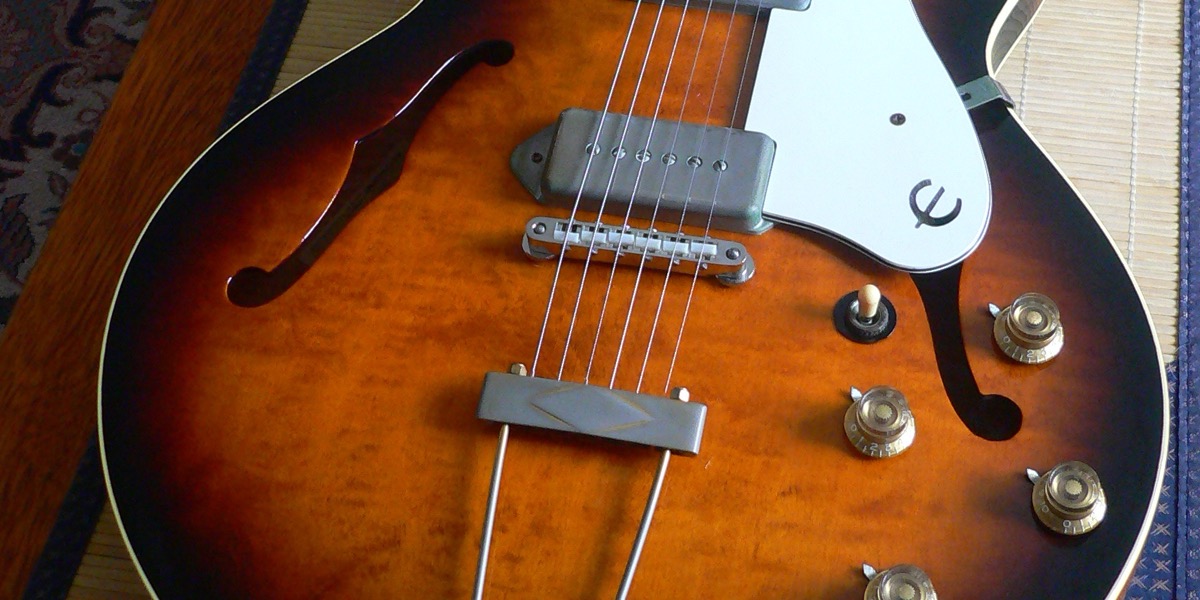
For many guitarists, Epiphone is the brand that makes cheaper Gibsons. That has been true for forty years. Before that, for a good part of the 1930s, the question ran the other way: in New York, jazz musicians hesitated between a Gibson and an Epiphone, and not all of them chose the Gibson.
A luthier from Smyrna in New York
The story begins in the Ottoman Empire, in Smyrna, now Izmir. Anastasios Stathopoulos made violins, ouds and laoutos there. The brand traces its beginnings to 1873, a date it still uses in its marketing, although some historians place the start of the business later, in the 1890s.
The family emigrated to the United States in 1903 and lost the final “s” of its name along the way. Settled in New York, Anastasios Stathopoulo made the most of the mandolin craze. He died in 1915. His son Epaminondas, known to everyone as Epi, took over and renamed the business House of Stathopoulo.
Banjos first
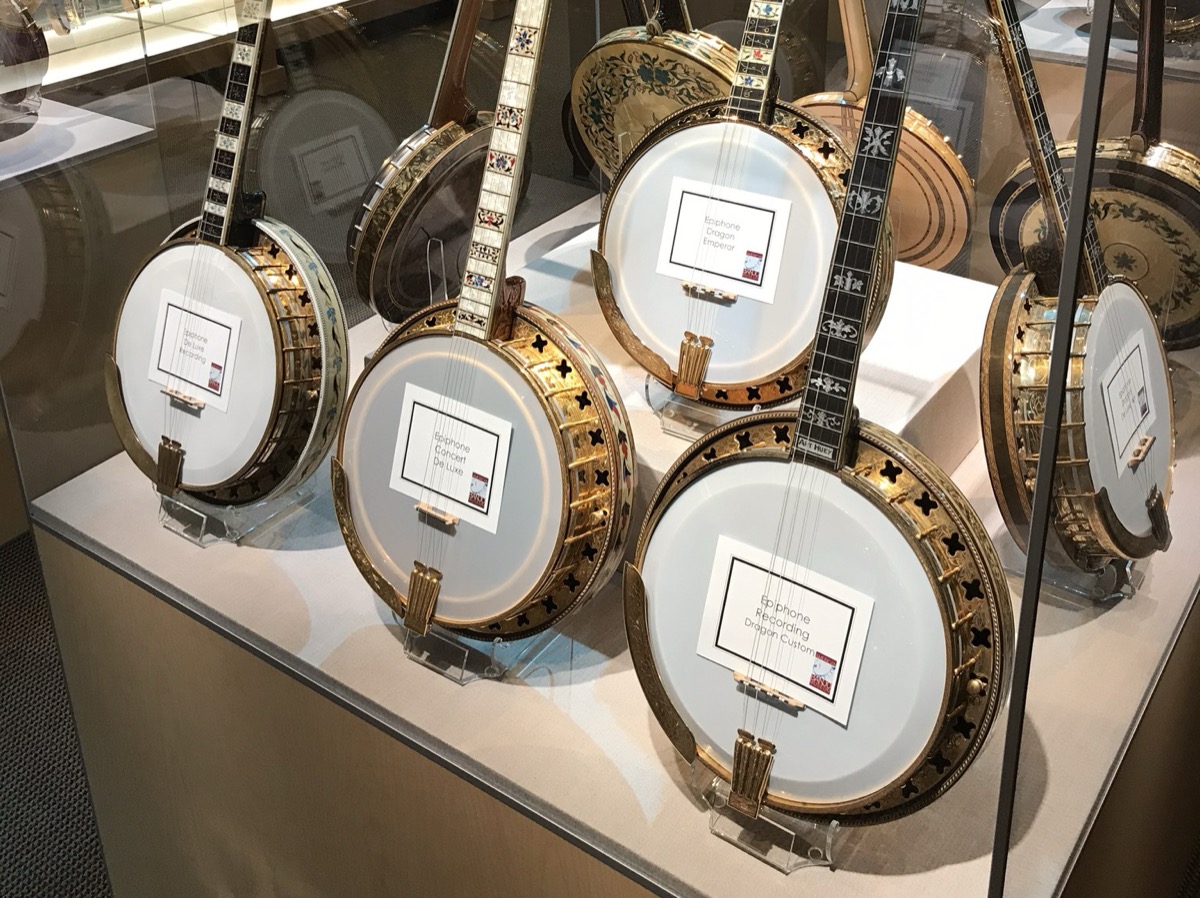
Few people were interested in the guitar at that point. In the bands of the years after the First World War, the banjo was what you could hear over the brass. So Epi made banjos, and increasingly luxurious ones, with gilding and inlays. In 1924 they took on a new brand name, formed from his nickname and the Greek word for sound. Four years later the company was called the Epiphone Banjo Company.
The first guitars came out that same year, 1928: the Recording series, recognisable by their sloping cutaway. They sold badly. They were small, at a time when an instrument’s volume depended on the size of its body, and Gibson had set the bar high with its L-5.
Ten years of war with Gibson
Epi learned the lesson. In 1931 he unveiled the Masterbilt range, a complete series of archtops including the De Luxe, Broadway and Triumph, priced from $35 to $275. This time the competition was head-on, and Gibson took it seriously. The two makers spent the decade widening their bodies to outdo each other. Gibson brought out the Super 400. Epiphone answered with the Emperor, which was wider still, and an advertisement showing a naked woman behind the instrument.
The shop on 14th Street in Manhattan became a gathering place. Guitarists would sit down there to play, and passers-by listened from the pavement. Among the regulars was a certain Les Paul. Around 1940 and 1941, he was allowed to use the workshop outside opening hours to build his “Log”, a length of timber fitted with pickups to which he eventually added two body halves. We tell the rest in the history of the Gibson Les Paul.
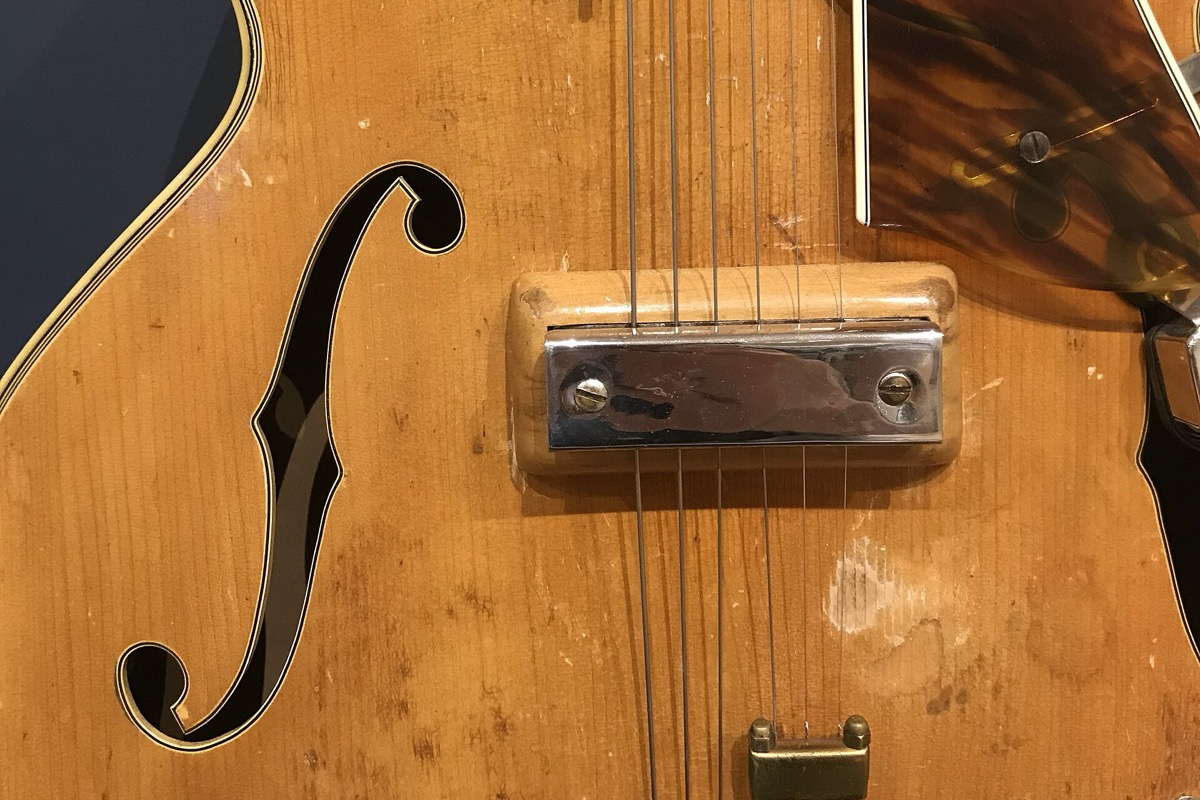
Epiphone also went electric as early as 1935, at first under the Electar name. Epi put Herb Sunshine in charge of development. Sunshine designed a pickup with a pole piece adjustable for each string, as well as the Frequensator tailpiece, the fork with two unequal prongs still seen on the regular Riviera. The amps were entrusted to Nat Daniel, who would later found Danelectro. The company even sold a foot-operated box, the Rocco Tonexpressor, which controlled volume and tone. The historian Tony Bacon regards it as the first guitar pedal.
The fall
The war broke the momentum. Epi died of leukaemia in 1943, aged 49. His brothers Orphie and Frixo took over the company and did not get along for long, with Frixo eventually selling his shares in 1948. Tastes were changing, and Epiphone came to be seen as a brand for pre-war jazzmen.
In 1951, a four-month strike pushed the management to leave New York for Philadelphia. Some of the workers refused to follow. They gathered around a former company executive and helped create Guild, whose first archtops closely resembled what they already knew how to make.
$20,000 and a removal lorry
Ted McCarty, the head of Gibson, had his eye on one specific part of the business: the upright basses. Gibson had stopped making them during the war and had lost its templates. He told Orphie Stathopoulo to call him the day he wanted to sell. The call came in 1957. The asking price was $20,000. McCarty spoke to the parent company, which agreed.
McCarty told Tony Bacon what happened next. When the lorry arrived from Philadelphia, it did contain what was needed to make basses, but also the templates, parts and tooling for the guitars. In Philadelphia, nobody had sorted through any of it. Gibson had just bought its oldest competitor outright while thinking it was buying a workshop.
He soon found a use for it. Gibson limited the number of its dealers and was turning people away. The shops it had rejected could have Epiphones, built in Kalamazoo with the same care.
Kalamazoo, the golden age
The new Epiphones were shown in 1958 and delivered the following year. Some had a Gibson twin. The 1961 Casino is close to an ES-330. The 1962 Riviera resembles an ES-335 with mini-humbuckers. Others, like the Sheraton, had no equivalent.
Among the solid bodies, the Coronet was in the same league as the Les Paul Junior: one pickup, a slab of mahogany, $132 in both cases. Buyers still went for the Gibson label. In 1959 the factory shipped 4,364 Juniors and 237 Coronets. The model has survived, and we have reviewed the current Coronet, which keeps the original idea.
By the mid-1960s, one guitar in five leaving Kalamazoo carried the Epiphone name.
Three Casinos for four Beatles
In late 1964, John Mayall played Paul McCartney some blues records and showed him his hollow guitar. McCartney wanted one. He bought a 1962 Casino, turned it over to play left-handed and used it for the solo on “Ticket to Ride”. He still owns it.
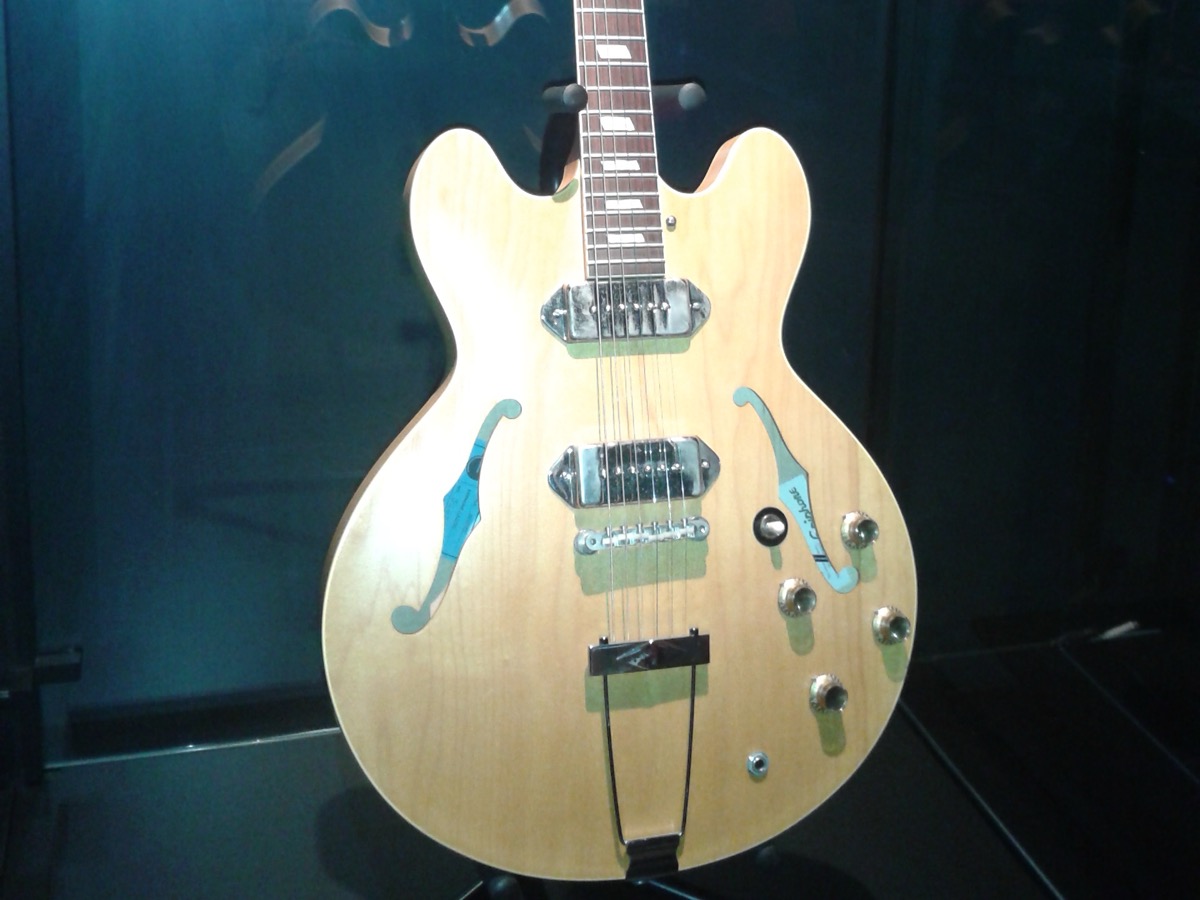
John Lennon and George Harrison got theirs for the “Revolver” sessions in spring 1966, and took their Casinos on the band’s last tour. In 1968, back from India, they followed a suggestion from Donovan and sanded the finish off them. Harrison thought they breathed better that way. It is this bare-wood Casino that Lennon plays in the “Revolution” film and on the Apple rooftop in January 1969.
Sales followed, at least for a while: 853 Casinos shipped in 1965, 1,655 in 1966, 1,814 in 1967. Then the market turned, for everyone. In 1968, 468 were sold.
Exile in Japan
McCarty had left Gibson in 1966. At the end of the decade the parent company changed hands and became Norlin. Up against cheap Japanese copies, the American Epiphones were too expensive, and the management took the decision that would stick to the brand: from 1970 they would be made in Japan, by Matsumoku.
The first catalogue was thin. Some steel-strings, some classicals, a solid body that brings a Fender to mind. Nothing recalled the models of the previous decade, apart from a semi-hollow that looked like a Casino from a distance. Then the standard picked up again. In the early 1980s, Matsumoku reissued the Casino, the Riviera and the Sheraton, and these guitars still have a good reputation today. Two of them ended up in a shop in Manchester.
Manchester, the 1990s
Noel Gallagher and Paul “Bonehead” Arthurs, of Oasis, walked into Johnny Roadhouse, a Manchester institution, with one thing in mind: an Epiphone, because the Beatles had them. They each came out with a Japanese Riviera, one wine red, the other sunburst. Noel Gallagher says he played his on all the rhythm parts of “(What’s the Story) Morning Glory?” in 1995.
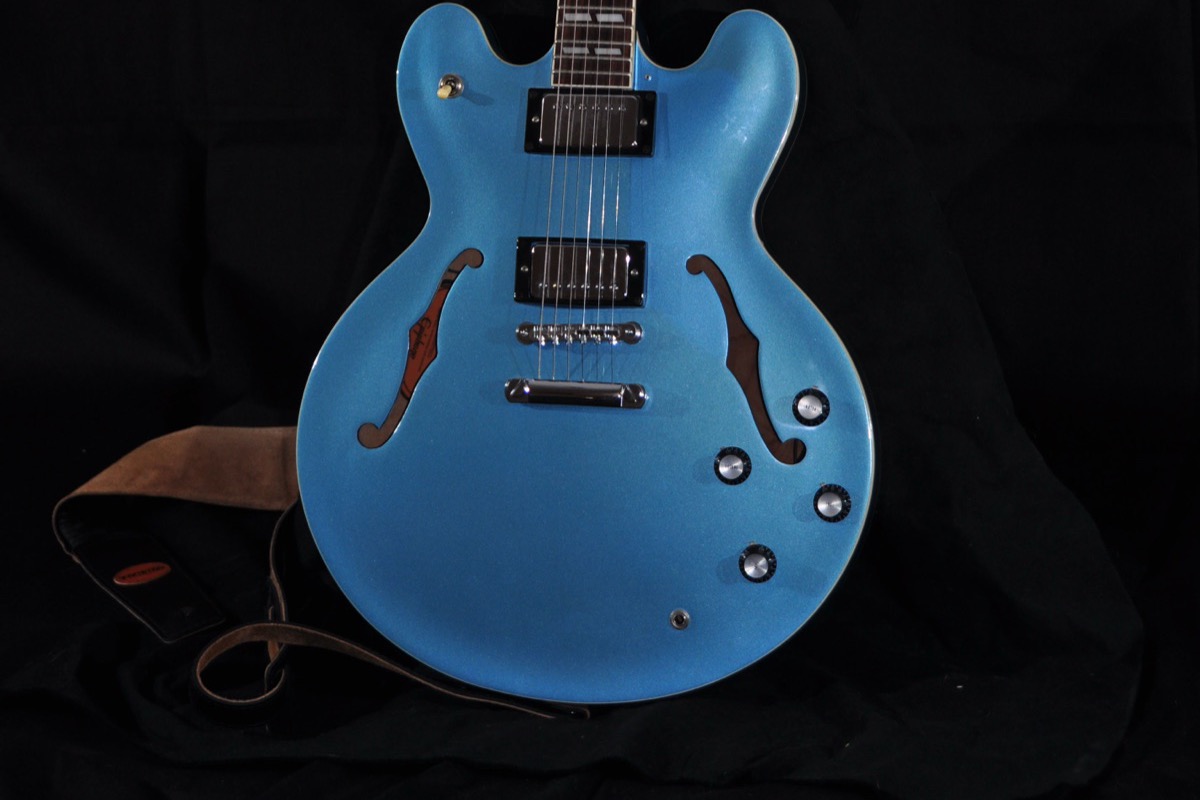
The band’s success did the brand good. Epiphone first released a Supernova bearing his name, including a version in Manchester City blue, then reissued the wine red Riviera in 2022. We have reviewed this Noel Gallagher Riviera, with reservations.
From Korea to Qingdao
In the meantime, production had left Japan for Korea, with Samick among the manufacturers. Gibson and Epiphone changed owners in 1986, and the new ones settled on the role we know: Epiphone would make the Les Pauls, SGs and ES-335s that not everyone can afford in their American versions.
In the early 2000s, Gibson opened its own factory in Qingdao, China. The guitars were no longer handed to subcontractors, and most of the catalogue still comes from there.
Epiphone today
Since 2020 the brand has presented itself in two halves, with open copies of Gibsons on one side and the historic models on the other. The Casino even got an American-made version again in 2021. More recently, the “Inspired by Gibson Custom” series went further, with Gibson pickups, careful electronics and the Gibson headstock shape. We spent six weeks with one of them, the 1960 Les Paul Special Double Cut, which sells for nearly €1,000.
If you are looking for an Epiphone that isn’t the budget version of something else, the Coronet, Casino, Riviera and Sheraton are still the four names to remember. All of them date from the time when the two brands shared the same factory.
Frequently asked questions
Where does the name Epiphone come from?
It is a made-up word. “Epi” was the nickname of Epaminondas Stathopoulo, who took over the family workshop when his father died in 1915, and “phone” comes from the Greek for voice or sound. The brand appeared on banjos in 1924, and the company became the Epiphone Banjo Company in 1928.
When did Gibson buy Epiphone?
In 1957, for $20,000, through its parent company Chicago Musical Instruments. Ted McCarty, who ran Gibson, mainly expected to get the upright bass business. He also received the templates and parts for the guitars, and relaunched the brand from the Kalamazoo factory.
Which Epiphone did the Beatles play?
Mostly the Casino, a hollow guitar with two P-90s. Paul McCartney bought his in late 1964, and John Lennon and George Harrison followed in time for the “Revolver” sessions in 1966. McCartney also used an Epiphone Texan acoustic, the one on “Yesterday”.
Where are Epiphone guitars made today?
Mostly in China, in a Qingdao factory owned by Gibson. Some models come from Indonesia, and a small high-end range is made in the United States. Production had previously moved to Japan from 1970, then to Korea in the 1980s.
Can an old Epiphone be worth as much as a Gibson?
Some can, yes. Epiphones built in Kalamazoo between 1958 and 1969 came out of the same factory as the Gibsons and are sought after, as are the New York archtops of the 1930s and 1940s. Japanese models from the 1980s have their followers too, at more reasonable prices.