Fender Player II Stratocaster review: our verdict after 6 weeks
Introduction
After six weeks with the Fender Player II Stratocaster, the verdict is clear: this is the most accomplished Mexican Stratocaster Fender has offered at this level. The return of the rosewood fretboard, the new ClassicGear tuners and a refined neck correct most of the criticisms levelled at the Player range. What remains is a price position that sets it against formidable rivals, starting with the parent company’s own high-end Squiers.
Launched in 2024, the Player II succeeds the Player, the brand’s best-seller since 2018. Fender has not revolutionised the formula: the Ensenada factory, the Alnico 5 pickups and the 2-point vibrato are all still there. The changes are elsewhere, in the details that make up daily life with an instrument. We played it for six weeks across blues, rock and funk, through a valve amp and a modelling amp, to find out whether the update justifies the gap in price with the second-hand market and the Squiers.
Design and build
The return of rosewood
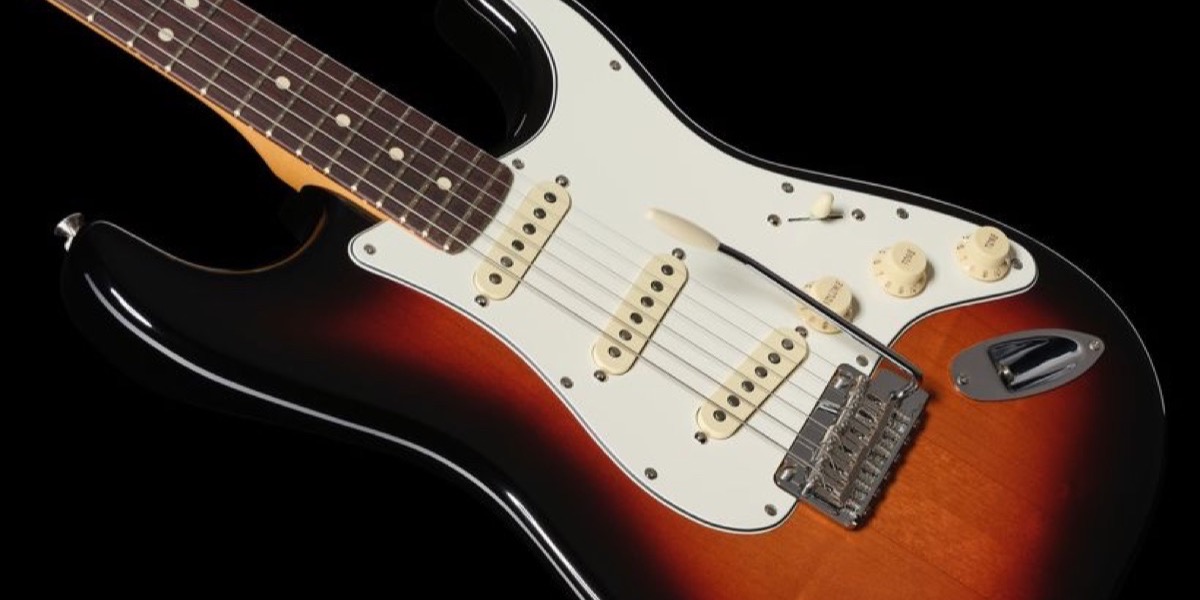
This is the most visible change: the rosewood fretboard is back on the Mexican range, after years of pau ferro that left many guitarists wanting. On our example the rosewood is dark, even and pleasantly oiled. A maple fretboard remains available on some finishes. The new colours introduced in 2024 are successful, with shades that step outside the eternal sunbursts without falling into the garish.
The body is alder, the Stratocaster’s classic recipe. Our example is well balanced, neither too heavy nor too light, and the comfort of the contours remains a benchmark in the category.
Neck and finishing
The maple neck adopts a Modern C profile, slightly refined compared with the Player. In the hand the difference is subtle but real: the thumb sits naturally and barre chords tire you less over long sessions. The 22 frets on our example are correctly polished, with no sharp edges along the fretboard — something that was not always a given on early Players.
On hardware the picture is more mixed. The new vintage-look ClassicGear tuners hold tuning correctly, but their feel lacks the precision of locking tuners, which Fender reserves for higher ranges. The 2-point vibrato does the job: used reasonably, for sustained effects or slight rises, the guitar returns to pitch well. Fans of deep dives should look elsewhere, but that is not this instrument’s calling. Note finally that no gig bag is supplied, a debatable choice at this price.
Tone
Three pickups, five positions, the whole Strat vocabulary
The three Player Series Alnico 5 single-coils carry over the previous generation’s recipe, and that is rather good news: those pickups were never the Player’s weak point. The bridge pickup snaps without being shrill, the neck pickup offers the singing roundness that defines the Stratocaster’s blues tone, and the intermediate positions deliver the expected funky “quack”, with that immediately recognisable midrange scoop.
Clean, the guitar excels. Arpeggios keep their definition even with generous reverb, and switching from one position to another is enough to change colour completely without touching the amp. That is exactly what distinguishes a Stratocaster from a Telecaster: less raw bite, but a markedly wider palette.
With gain
In crunch, the Alnico 5 pickups respond very well to the guitar’s volume control: you move from a pearly clean to a Texan crunch by turning a knob, typical behaviour of good single coils. Under heavy gain the limits arrive: single-coil hum makes itself heard, especially near screens or power supplies, and the grain stays finer, less massive than that of a Les Paul’s humbuckers. That is not a flaw, it is an identity: the Stratocaster does not chase thickness, it chases articulation.
In real conditions
We split the six weeks of testing between two setups. Through a Marshall DSL20HR, the Player II showed itself to advantage in blues and classic rock: the Marshall’s clean channel brings out the intermediate positions, and the drive channel gives a very convincing nervous crunch with the bridge pickup. The guitar holds tuning across a full two-hour rehearsal, vibrato included.
Through modelling, with a Positive Grid Spark 2, the versatility of the five positions makes full sense: every preset finds a pickup that suits it. For a guitarist building a rig, that kind of modelling amp is a logical companion for a Player II.
In funk the guitar is in its element: the attack of positions 2 and 4 in chopped rhythm playing is precise, and the short sustain of the single coils serves the groove. It is in heavily saturated modern rock that the instrument is least relevant, as much for the hum as for the grain. A metal-oriented guitarist will look at the HSS versions of the range.
Value for money
This is where the real debate lies. The Player II is an excellent guitar, but it operates in a fiercely contested price zone, including within Fender itself.
| Model | Pickups | Made in | ≈ Price | Who it’s for |
|---|---|---|---|---|
| Fender Player II Stratocaster | 3 Alnico 5 single coils | Mexico | ≈ €799 | The intermediate player who wants a real, lasting Fender |
| Squier Affinity Telecaster | 2 ceramic single coils | China/Indonesia | ≈ €257 | The beginner on a tight budget |
| Gibson Les Paul Standard | 2 humbuckers | USA | ≈ €2,499 | The rock/blues player chasing thickness |
Against Squier Classic Vibes and other very well-finished Asian rivals, the Player II justifies the gap through its pickups, the 2-point vibrato, Ensenada’s consistency of manufacture and markedly higher resale value. But the gap has narrowed, and the absence of a gig bag as well as the standard tuners are reminders that Fender keeps arguments in reserve for its higher ranges. Value for money remains good, if no longer quite unbeatable.
Final verdict
Who is it for?
Ideal for:
- The intermediate guitarist who wants their first “real” Fender
- Blues, classic rock, funk and pop styles
- Anyone looking for a versatile instrument to cover a wide repertoire
- Rosewood fans disappointed by the pau ferro of the Players
Less suited to:
- Metal and heavy gain, which call for humbuckers
- Tight budgets, better served by a Squier in the meantime
- Heavy vibrato users, who will aim for a locking system
Our verdict
The Fender Player II Stratocaster is an intelligent update rather than a revolution. Fender has corrected precisely what irritated on the Player: the fretboard, the neck profile, the colours, a few finishing details. The result is a coherent, pleasant, versatile Mexican Stratocaster that honours its name and will last years in its owner’s hands.
Its flaws are known and owned: unremarkable hardware, single coils that hum when you push the gain, and a price position that no longer has the obviousness it once had against the best Squiers. If you are hesitating between the two, our advice fits in one sentence: if the budget allows without straining, take the Player II — you will not be buying another guitar in two years.
Prices are indicative.
Tested over 6 weeks through a Marshall DSL20HR and a Positive Grid Spark 2, across blues, rock and funk, in rehearsal and at home.
What we liked
- Return of the rosewood fretboard to the Mexican range
- Remarkable versatility from the three Alnico 5 pickups
- Comfortable Modern C neck, well-finished frets
- 2-point vibrato stable in reasonable use
- Careful finishing, successful new colours
What we didn't
- A price closing in on very well-equipped rivals
- Decent hardware but no more; tuners lag behind
- Single coils prone to hum under heavy gain
- No gig bag or case supplied
Frequently asked questions
What is the difference between the Fender Player II and the Player?
The Player II replaced the Player range in 2024. The main changes: the return of the rosewood fretboard on certain finishes, ClassicGear tuners, a refined neck profile, new colours and a reworked nut. The pickups remain Player Series Alnico 5, close to the previous generation.
Where is the Fender Player II Stratocaster made?
The Player II Stratocaster is made in Mexico, at Fender's Ensenada factory. That is the same plant that produced the Player range. Mexican build quality is now very consistent and has little to envy in entry-level Japanese series.
Is the Player II Stratocaster suitable for a beginner?
Yes, but it is aimed above all at the intermediate guitarist who wants a lasting instrument. A beginner will find a comfortable neck and stable tuning, but could start on a far cheaper Squier and move up later, once their commitment is confirmed.
Fender Player II or a high-end Squier: which to choose?
A Squier Classic Vibe offers excellent value, but the Player II keeps the advantage on pickups, the 2-point vibrato and overall finish. If the budget allows, the Mexican Fender remains a better long-term investment, resale included.