Best guitar wireless system under €150: our 2026 comparison
Our picks at a glance
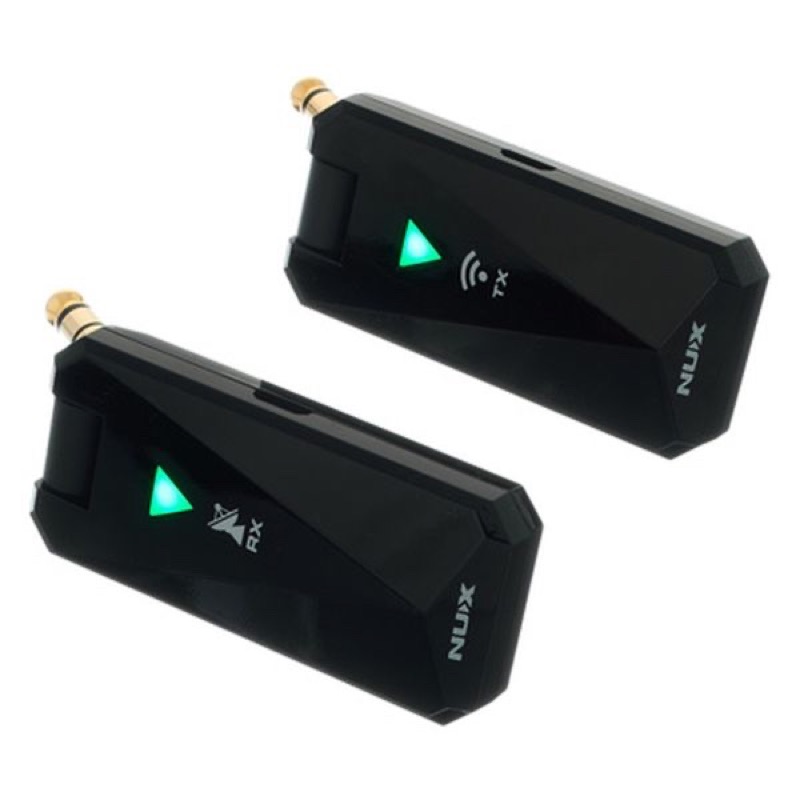
- Stated latency under 5 ms, imperceptible while playing
- Charging case: about 3 recharges, so ≈ 15 h in reserve
- Transmitter alone runs for only ≈ 4 h
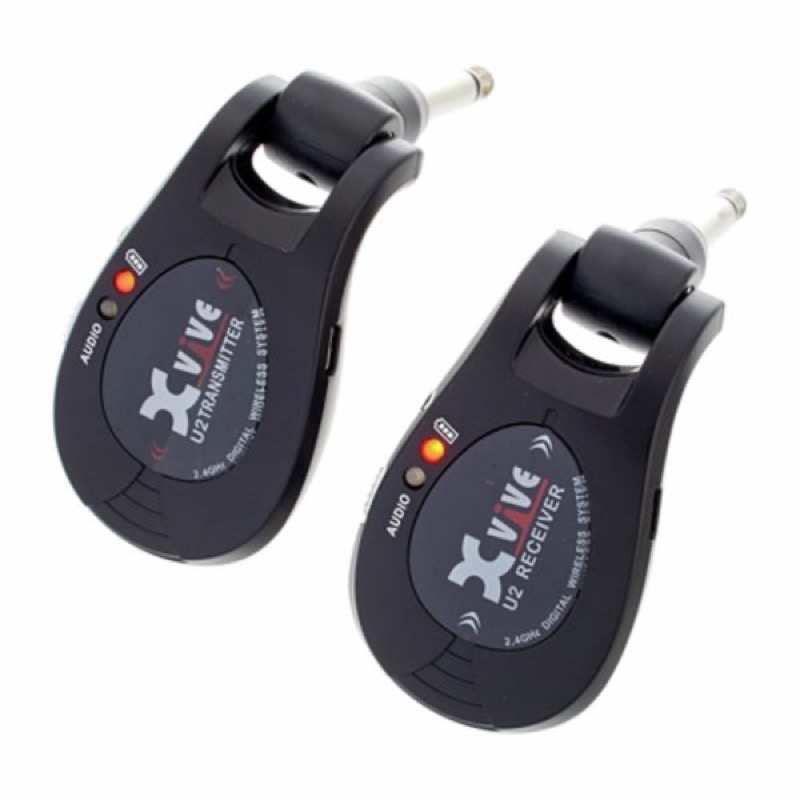
- 5 ms latency, 4 selectable channels
- 220° rotating jack, fits almost any output socket
- ≈ 5 h of battery life, with no portable charging
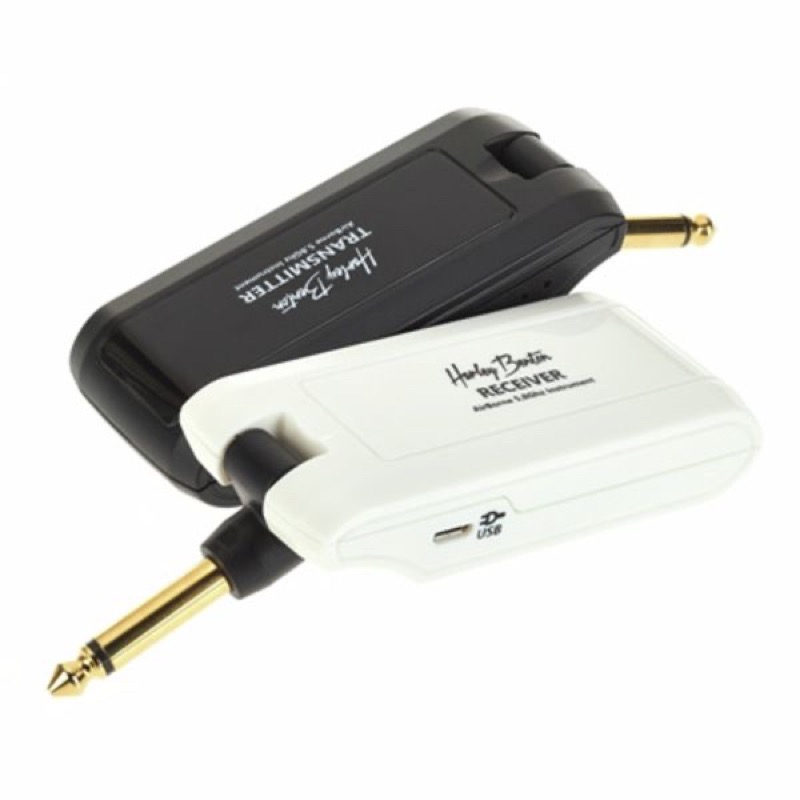
- Stated latency under 5.6 ms, 4 channels
- 35 m range in open field, jack rotates through 225°
- ≈ 4 h of battery life (450 mAh cell)
Playing without a cable is no longer a luxury reserved for touring: for under €150, a modern guitar wireless system delivers imperceptible latency and a stable link in rehearsal as well as on stage. Our pick is the NUX B-5RC: stated latency under 5 ms, 30 metres of range and, above all, a charging case that solves wireless’s real day-to-day problem — the battery. The Xvive U2 remains the safe bet, proven by years of user feedback, and the Harley Benton AirBorne 5.8GHz opens up wireless for a third of the price. Here is how these three systems compare, based on their spec sheets and user feedback.
Comparison table
| System | Band | Latency | Transmitter battery | Range | Guide price | Who it’s for |
|---|---|---|---|---|---|---|
| NUX B-5RC | 2.4 GHz | < 5 ms | ≈ 4 h, + charging case (≈ 3 recharges, ≈ 15 h in reserve) | ≈ 30 m | ≈ €115 | Rehearsal-to-gig regulars |
| Xvive U2 | 2.4 GHz | 5 ms | ≈ 5 h | ≈ 21 m line of sight | ≈ €122 | The pragmatist who wants proven kit |
| Harley Benton AirBorne 5.8GHz | 5.8 GHz | < 5.6 ms | ≈ 4 h | ≈ 35 m in open field | ≈ €49 | Discovering wireless on the cheap |
Prices seen at Thomann on the date the article was updated; they can move. Ranges and latencies are manufacturer figures.
How we chose
This comparison is a documented round-up: we cross-referenced manufacturers’ spec sheets with user feedback published on retailer sites and specialist forums, without claiming to have had each system in hand. Two notable absences deserve an explanation. The Line 6 Relay G10 II, long the benchmark in this category, has been dropped from the Thomann catalogue and therefore falls outside this comparison. The Boss WL-20 now goes past the €150 ceiling; it remains technically remarkable and gets an over-budget mention at the end of the article.
Four criteria guided the selection. Latency first: that is the knockout criterion. A system that goes past 10 ms can be felt under the fingers; all three models here claim to stay under 6 ms. Battery life next, because a flat transmitter mid-set is wireless’s worst-case scenario. Link reliability in real conditions, as it emerges from feedback by players gigging in venues where the 2.4 GHz band is already crowded. And finally value for money: under €150, every euro has to justify itself.
Every system here is digital, works licence-free (unlike professional UHF systems) and plugs straight into the guitar, with no beltpack.
NUX B-5RC: our pick
The B-5RC borrows a very simple idea from true wireless earbuds: a charging case. Transmitter and receiver stow and charge in it, and the case carries its own battery, good for about three full recharges — roughly 15 hours in reserve. The transmitter’s own runtime, around 4 hours, sits at the low end of the category; but with the case in your gig bag, the battery question disappears in practice. That is what earns it first place: no rival in this comparison offers that convenience.
The rest of the spec is solid: 2.4 GHz with automatic pairing, a rotating jack that fits straight and angled sockets alike, a stated 30 metres of range and a stated latency under 5 ms, imperceptible while playing. According to user feedback, the link is stable in rehearsal and on small stages, and build quality is better than the price would suggest.
Who it’s for: the guitarist juggling rehearsals and small gigs who never wants to run out of battery. Not for: anyone playing only at home, next to a socket — the case loses its point.
Xvive U2: the safe bet
The U2 is the veteran of this selection: years on the market, tens of thousands of units sold, and a broadly positive user consensus that makes it the category’s safe bet. It has the most compact format here, and its 220° rotating jack lets it sit in almost any socket, including the recessed sockets that give bulkier transmitters trouble.
The spec sheet quotes 5 ms of latency, 4 manually selectable channels and a range of about 21 metres line of sight, per the manufacturer. Manual channel selection cuts both ways: no automatic switching if there is interference, but the ability to pick a free channel yourself, which is enough in rehearsal and on small stages according to user feedback.
Its main limit is battery life: around 5 hours, with no charging case or dock. You have to remember to charge it before playing, and both units charge over a cable. Note too that reservations are documented in user feedback with guitars carrying active electronics. At a price now very close to the NUX B-5RC’s, you choose it for its proven track record rather than its price.
Who it’s for: the pragmatic guitarist who wants a compact system with a long reliability record. Not for: long playing days with no access to a socket, and instruments with active pickups.
Harley Benton AirBorne 5.8GHz Instrument: best budget
At around €49, the AirBorne 5.8GHz Instrument is the cheapest ticket into serious wireless, and it has a technical argument the other two lack: the 5.8 GHz band. That spectrum is far less crowded than 2.4 GHz, which is monopolised by Wi-Fi, Bluetooth and the other musicians’ wireless systems. In a saturated venue, that is a real advantage on paper.
The trade-off is physical: the higher the frequency, the less the waves pass through obstacles. The stated 35 metres in open field shrinks fast as soon as a wall, a crowd or your own body comes between transmitter and receiver. In practice, according to user feedback, the link is stable in rehearsal and at home, but keep the receiver in sight of the transmitter.
The spec sheet quotes latency below 5.6 ms, 4 channels, a jack that rotates through 225° and around 4 hours of runtime from a 450 mAh cell. Watch out for one explicit limit in the Thomann listing: the system is not compatible with active pickups. To discover the comfort of playing cable-free before investing more, it is hard to be more accessible.
Who it’s for: the curious player who wants to try wireless with no financial commitment, or a backup system. Not for: instruments with active electronics, and regular gigging with walkabouts into the crowd — 5.8 GHz’s sensitivity to obstacles becomes a handicap.
The over-budget mention: Boss WL-20
At around €184 at Thomann, the WL-20 goes past this comparison’s ceiling, but on paper it remains the best consumer wireless system. Its 2.3 ms latency is about half that of our three picks, its stated runtime reaches ≈ 12 hours for the transmitter and ≈ 7 hours for the receiver, over a range of roughly 15 metres. Its real argument is cable simulation: emulating the capacitance of a 3-metre cable restores the “plugged-in” tone that brighter wireless takes away. According to user feedback the difference is subtle but real, particularly with single-coil pickups. If your budget can climb past €150, this is the one to look at; for active electronics, Boss points to the WL-20L, the variant without cable simulation.
2.4 GHz or 5.8 GHz: what to know before buying
The 2.4 GHz band saturates quickly in a venue. It is the band of Wi-Fi, Bluetooth and most affordable wireless systems. On a gig night, between the audience’s phones, the bar’s router and the other bands’ systems, it can get crowded. Systems with selectable channels (NUX B-5RC, Xvive U2) let you pick a free one; the AirBorne’s 5.8 GHz sidesteps the problem but tolerates obstacles poorly.
A cable is still preferable in some cases. For studio recording, a good cable removes any question of latency, battery or interference. The same goes if you play sitting two metres from your amp at home: wireless then only adds batteries to charge. Wireless earns its place as soon as you move: stage, standing rehearsal, or simply the urge to go and hear your tone from the back of the room, which remains the best way to dial in an amp.
Check your output socket. Transmitters plug straight into the guitar: recessed sockets (Telecaster-style, or Stratocaster jack cups) and angled jacks can get in the way of bulky transmitters. Rotating or swivelling jacks (Xvive U2, NUX B-5RC, AirBorne) are the most accommodating.
Active electronics: read the spec sheet. Not every system accepts active pickups: the AirBorne 5.8GHz explicitly rules them out, reservations are documented for the Xvive U2, and Boss dedicates the WL-20L to that use.
Verdict
For most guitarists the NUX B-5RC is the safest choice under €150: imperceptible latency, comfortable range and a charging case that solves wireless’s real day-to-day problem. The Xvive U2 makes sense if you value an ultra-compact format and a reliability record several years long, provided you can live with cable charging. And to discover wireless without spending much, the Harley Benton AirBorne 5.8GHz does the job at home and in rehearsal, as long as your pickups are passive and the receiver stays in sight. If the budget can climb past the ceiling, the Boss WL-20 remains the category’s technical benchmark.
Article published on 14 April 2026, updated on 18 August 2026. Prices are indicative, seen at Thomann, and can change.
Frequently asked questions
Does a wireless system degrade the guitar's tone?
No, not on recent digital systems: the signal is transmitted with no audible compression. Paradoxically, wireless can sound brighter than a long cable, which rolls off the treble. That is why the Boss WL-20 includes a 3-metre cable simulation that restores that natural roll-off.
What latency is acceptable for playing guitar wirelessly?
Below 6 ms, latency is imperceptible to virtually every guitarist: it corresponds to sound travelling about two metres through air. Past 10 ms, a sense of lag can appear. All three systems here stay under 6 ms according to their spec sheets.
Does a guitar wireless system work with a bass or an active guitar?
Not always: check the spec sheet before buying. The Harley Benton AirBorne 5.8GHz is explicitly listed as incompatible with active pickups, and reservations are documented for the Xvive U2. Boss, for its part, recommends the WL-20L — the variant without cable simulation — for active electronics.
How long does a wireless system's battery last?
Compact transmitters run for around 4 to 5 hours per charge, and their lithium cells handle several hundred cycles, meaning several years of regular use. They are not replaceable on most models. A charging case like the NUX B-5RC's adds roughly three portable recharges and limits deep cycles.