Electro-Harmonix Big Muff Pi: who the legendary fuzz is for
Introduction
The Electro-Harmonix Big Muff Pi is not just a pedal: it is a cultural symbol. Launched in 1969, it forged the sound of psychedelic rock, grunge and alternative rock. Jimi Hendrix, David Gilmour, Billy Corgan, Jack White: the list of legendary users is endless. Its vintage look, its provocative name and above all its massive tone make it a timeless icon. But does it still deserve its reputation? Here is our analysis.
Design and build
Fantastic retro looks
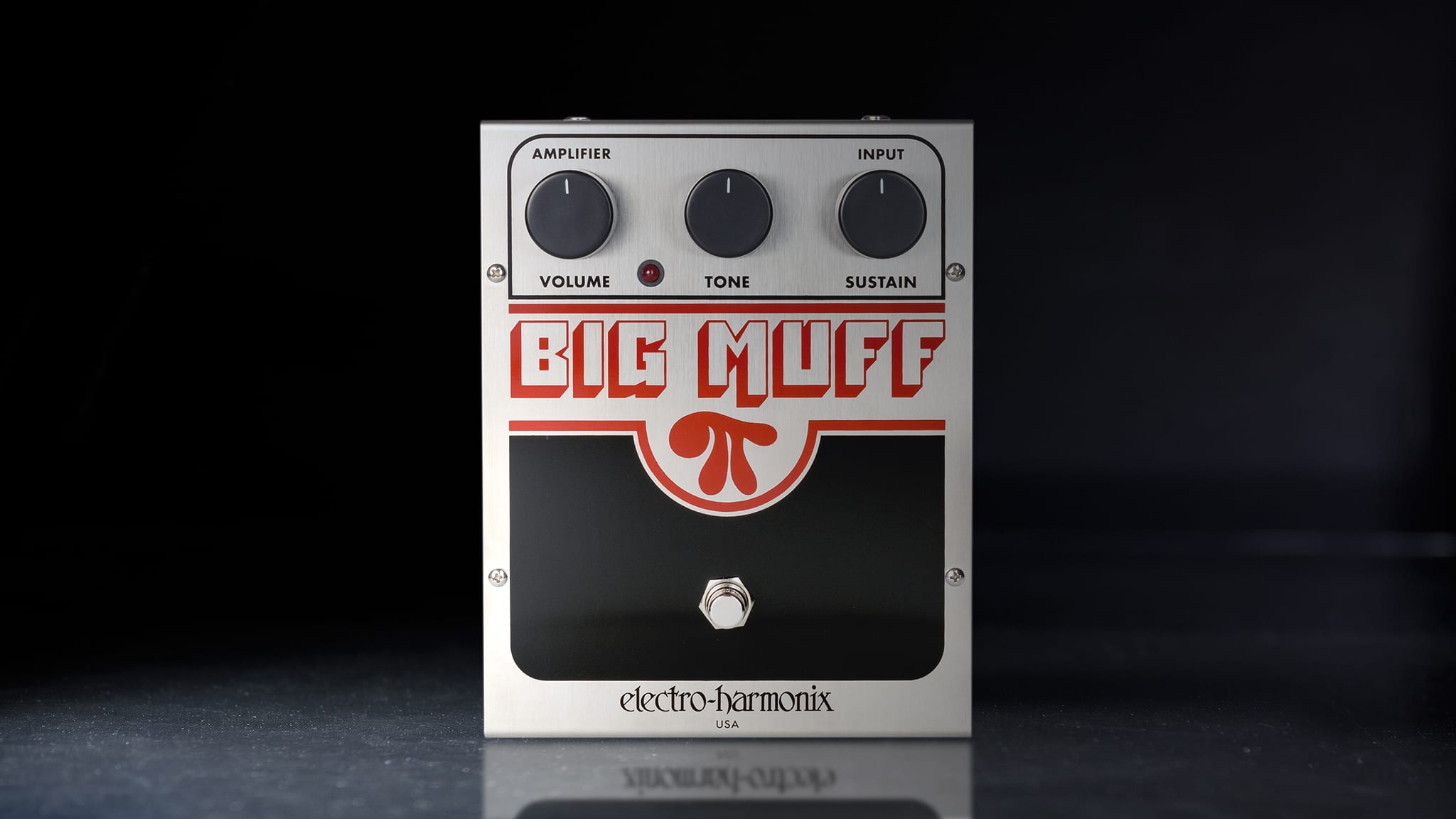
The Big Muff Pi wears absolutely fantastic retro looks. The grey metal enclosure, the stylised vintage logo, the enormous black knobs: everything breathes the 1970s. This is a pedal with style and presence, one that owns its heritage.
The enclosure is large. Much bigger than a standard Boss pedal (140 x 110 x 55 mm), it takes up considerable pedalboard space. But that size contributes to its aura: this is not a small discreet pedal, it is a monument.
The 550 g weight is reassuring. You feel you are holding a substantial object, not a plastic toy.
Solid construction
The grey metal enclosure is elegant and retro. The corners are less rounded than a Boss, so more vulnerable to violent knocks. But for normal stage and studio use, the solidity is there.
The three enormous knobs are a visual treat. Those big controls are easy to handle, even in stage darkness. The markings make it possible to memorise your favourite settings.
The footswitch is wide and responsive. True bypass perfectly preserves the original tone when the pedal is disengaged, unlike the buffered bypass of the Boss DS-1. Your signal is not coloured when the pedal is off.
Ease of use
Deceptive simplicity
The Big Muff is simple to use: three knobs, one footswitch. But finding YOUR setting can take time. The Tone control is particularly sensitive and can radically transform the character.
The three controls:
- Volume: output level
- Tone: tonal balance (bass to treble)
- Sustain: amount of fuzz/distortion
A good starting point: all knobs at noon. Then adjust Sustain according to the level of fuzz you want, and Tone according to the amp and the mix.
The pedal responds strongly to the guitar’s volume control. Rolling the guitar back cleans up the tone, allowing interesting dynamic nuances. That is a characteristic of vintage fuzz.
Tone
The signature sound
The Big Muff’s tone is unique and immediately recognisable. It is a thick, creamy fuzz with monumental sustain. Notes hold almost indefinitely, turning into controlled feedback if you let them ring.
The grain is soft, almost velvety, very different from an aggressive DS-1-style distortion. It is warm, enveloping, psychedelic. For David Gilmour-style solos, it is absolutely perfect. The sound of “Comfortably Numb”? That is a Big Muff.
The bass is powerful, almost too much so. The treble can be bright or softened depending on the Tone setting. But the mids are scooped, which gives that hollow character so typical of the pedal. It is deliberate: it creates that psychedelic wall-of-sound effect.
How the controls interact
The Sustain control runs from light crunch to total fuzz. Fully up, it is a wall of saturation. At halfway, you get more nuanced textures, almost overdrive-like. The range is wide and musical.
Tone is crucial:
- Left (dark): the tone becomes dark, almost muffled, ideal for doom or stoner textures
- Middle (balanced): a compromise between bass and treble, still scooped in the mids
- Right (bright): a bright, almost nasal tone, perfect for cutting through a mix
Volume amply compensates for the level loss. You can even boost the signal for solos that pierce the mix.
In real conditions
Plugged into a clean Fender Blues Junior, the Big Muff completely transforms the sound. It is a thick, creamy, psychedelic wall of fuzz. Chords become massive. Solos sing with endless sustain.
Into an already-driven amp, it can become too thick. It prefers clean or lightly crunchy amps, such as Fenders or Voxes.
Tonal strengths
- Legendary thick, creamy fuzz tone
- Sustain that seems endless
- Unique psychedelic character
- A velvety, soft, enveloping grain
- Perfect for singing Gilmour-style solos
Limits
- Significant midrange loss (can disappear in a dense mix)
- Approximate tracking on fast notes (complex riffs can turn to mush)
- Bass sometimes too dominant
- Not suited to precise technical metal
Versatility and styles
Musical styles
The Big Muff excels at:
- Psychedelic rock: Pink Floyd, Jimi Hendrix
- Stoner/doom: Sleep, Electric Wizard
- Grunge: Smashing Pumpkins, Mudhoney
- Shoegaze/post-rock: My Bloody Valentine
It is less suited to:
- Technical modern metal: approximate tracking, lack of precision
- Blues: too thick (an overdrive suits better)
- Jazz: incompatible
- Pop/funk: too aggressive
This is a pedal of texture and atmosphere, not surgical precision.
Stacking with other pedals
The Big Muff loves being paired with:
- A boost/overdrive in front (Tube Screamer): restores mids and definition. A classic marriage.
- Delay/reverb after: sublimates solos and creates immense beds. For shoegaze or post-rock, it is magic.
- An EQ after: lets you correct the scooped mids
Stacking several fuzzes or distortions, on the other hand, quickly turns muddy.
Technical points
True bypass
The Big Muff uses true bypass, meaning the signal is not coloured when the pedal is disengaged. That is an advantage for purists who want to preserve their core tone.
Unlike the DS-1’s buffered bypass, true bypass does not protect the signal over long effects chains. But for most guitarists, it is an advantage.
Power
Consumption: 9 mA. A 9V battery will last several months in normal use. Compatible with any standard 9V centre-negative supply.
Alternative versions
Electro-Harmonix offers dozens of variants:
- Nano Big Muff (around €70): compact format for smaller pedalboards
- Op-Amp Big Muff (around €90): more aggressive and tighter
- Russian Big Muff (around €100): darker and more massive
- Deluxe Big Muff (around €150): with added blend and gate
Each version has its fans. The standard version, the one discussed here, remains the most versatile and the most iconic.
Value for money
At €89, the Big Muff is an excellent deal. For that price you get:
- A legendary pedal used on cult albums
- A unique, irreplaceable tone
- A piece of rock history
- True bypass
- Solid construction
It costs more than a DS-1 (€55), but the character is completely different. It is not a question of price, it is a question of unique tonal character.
Clones exist (BYOC, Mooer, Joyo) at lower prices, but the real EHX has that cachet, that aura. And resale will always be easy: it is a safe bet.
For anyone who wants THIS sound, no other pedal will do.
Final verdict
Who is it for?
Ideal for:
- Fans of Pink Floyd, Hendrix, Smashing Pumpkins
- Psychedelic rock, stoner, doom and grunge guitarists
- Anyone chasing an authentic vintage fuzz tone
- Singing solos with endless sustain
- Collectors of legendary pedals
- Shoegaze and post-rock
Less suited to:
- Precise technical metal (lack of precision)
- Anyone after a pedal versatile across all styles
- Compact pedalboards (large enclosure)
- Preserving the mids (it scoops them deliberately)
Our verdict
The Electro-Harmonix Big Muff Pi is a living legend, and it amply deserves to be. Its unique character, its endless sustain and its creamy grain make it an absolutely iconic pedal. It is not versatile, it is not precise, but when you want THAT vintage psychedelic fuzz tone, nothing can replace it.
The sound of “Comfortably Numb”, the wall of guitars on Smashing Pumpkins records, Hendrix’s psychedelic leads: that is the Big Muff. It is not just a pedal, it is a piece of rock history.
At €89, it is a reasonable investment for a sound that forged entire albums. Whether you are a Pink Floyd fan, a Smashing Pumpkins fan, or simply curious about vintage fuzz, the Big Muff is a rite of passage.
If you are looking for a versatile distortion for every style, get a DS-1. But if you want THAT thick, creamy, psychedelic fuzz tone, the Big Muff is irreplaceable.
In summary
An absolute fuzz legend with a unique character and endless sustain. Specialised, but irreplaceable in its register.
Analysis based on the manufacturer’s spec sheets, published user feedback and our knowledge of the market. It does not rest on the four weeks of real-world use our hands-on reviews require: see how we test.
What we liked
- Legendary thick, creamy fuzz tone
- Monumental sustain
- Unique vintage character
- True bypass
- Reasonable price (€89)
- A cultural icon of rock
What we didn't
- Significant midrange scoop
- Can disappear in a dense mix
- Not versatile across all styles
- Large enclosure on a pedalboard
- Approximate tracking on fast notes